






Study Shows Handwriting Enhances Early Reading and Writing Skills Over Typing
Typing vs. Handwriting in Early Education
As schools increasingly use computers to teach reading and writing, many children learn letters through keyboards. But new research suggests handwriting may offer stronger learning benefits.
What the Researchers Did
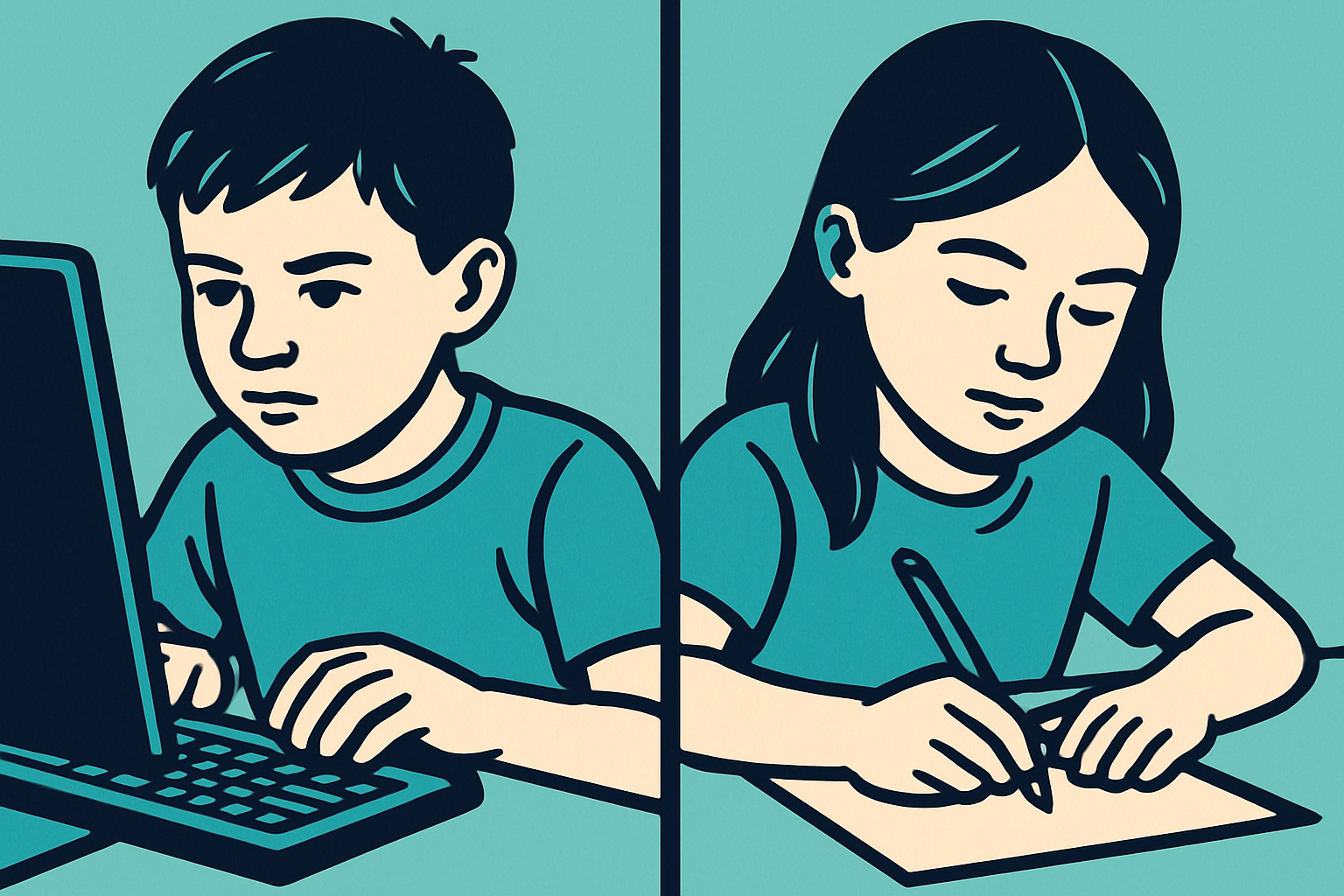
A study by the University of the Basque Country tested 5- to 6-year-old children on how well they learned new letters and words by either writing by hand or typing. They taught nine unfamiliar letters (from Georgian and Armenian) and 16 made-up words (pseudowords).
Handwriters Outperformed Typers
Children who practiced writing by hand showed better performance in letter recognition, word writing, and word decoding.
The Power of Movement
Writing by hand involves “graphomotor” activity—tracing letter shapes with a pencil—which helps children understand how letters are formed. Typing doesn’t require the same hand engagement.
Letting Kids Write Freely Helps
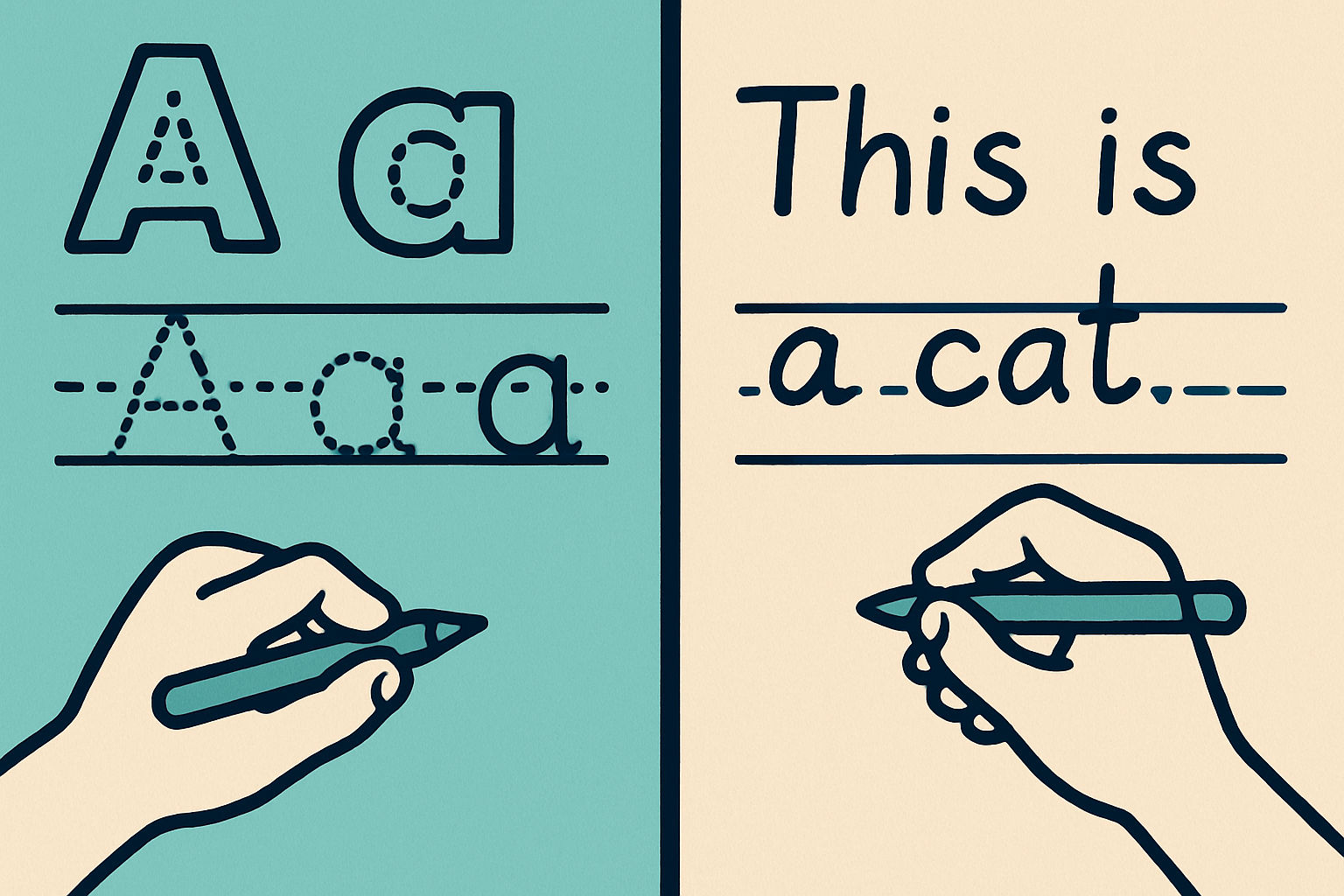
Children who wrote letters without tracing guides learned better than those who followed letter outlines. More freedom in writing led to greater flexibility and stronger performance.
Handwriting First, Keyboards Later
The researchers recommend emphasizing handwriting in early learning. Digital tools can support—but not replace—manual writing during foundational stages of literacy development.


