




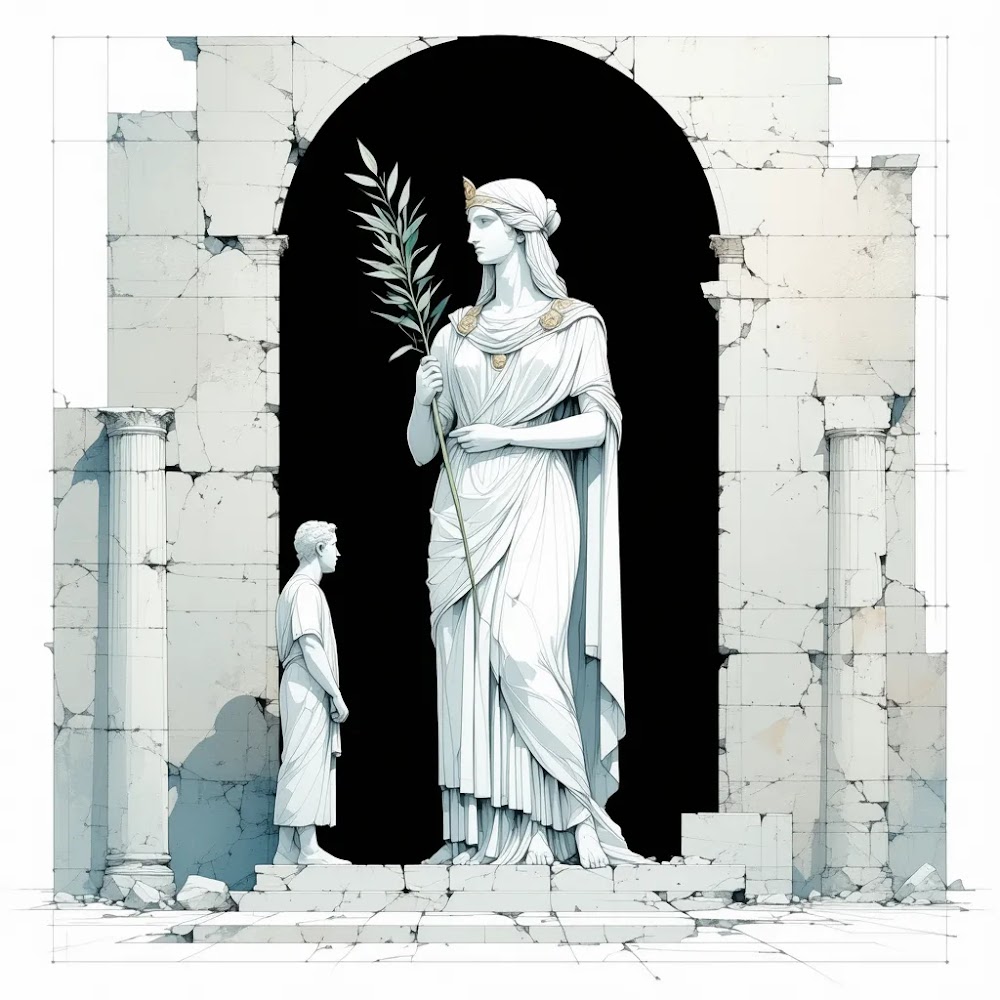

Life-size sculptures uncovered in Pompeii show that ancient women didn’t just have to be wives to make a difference
Beyond the City Gates of Pompeii
Visitors to Pompeii rarely explore outside its walls—but ancient Romans saw these roads as vital. These byways were lined with tombs that functioned as memorials, conversation starters, and lessons from the dead.

“File:Italie Pompei Necropole – panoramio (1).jpg” by rene boulay is licensed under CC BY-SA 3.0 

 .
.
Memory, Mourning, and Messages
Roman tombs often addressed passersby directly. One example by Publius Vesonius Phileros even advised: ‘Stranger, wait a while… and learn what not to do.’
Life-Size Legacy Unearthed
A newly uncovered tomb outside Pompeii’s east gate features statues of a man and a woman standing side by side, with cremation niches below them.

Pompeii Archaeological Park
Details That Defy Assumptions
The woman wears traditional Roman attire, a lunula pendant, and holds a laurel branch—a priestess symbol. The man wears a Roman toga, indicating his status as a citizen.
Not Just a Wife
She may not be his wife—possibly a priestess, or even his mother. Her symbolism and height suggest she holds status in her own right.
Across Time and Empires
At Mycenae, a woman buried beside a man was thought to be his wife until DNA analysis in 2008 revealed they were siblings—she was royal by birth, not marriage.
What the Dead Can Teach the Living
From Pompeii to Mycenae, ancient burials reveal women’s societal roles were more varied than once assumed. As Phileros warned—learn what not to do: don’t assume.