




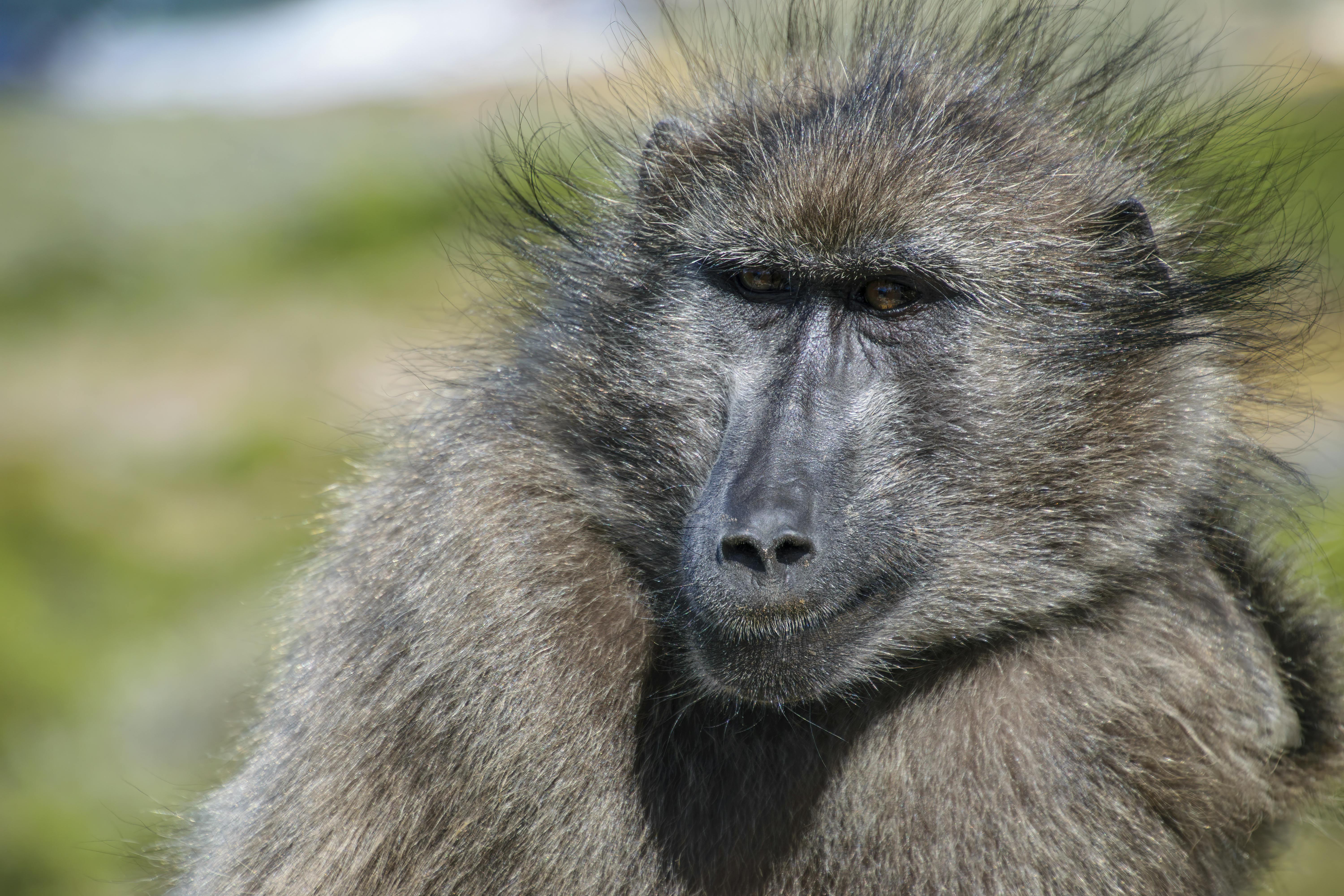

At a Glance
- New research overturns the belief that baboons travel in lines for safety, suggesting that social friendships are their formations’ primary drivers, not a deliberate survival strategy.
- Using high-resolution GPS tracking on chacma baboons in South Africa, scientists gathered precise data that challenged previous assumptions about the animals’ collective movement and social behavior.
- The study systematically ruled out theories based on predator avoidance, resource competition, or designated leaders, finding no evidence that these factors influenced the baboons’ non-random travel order.
- A baboon’s position is instead predicted by its social bonds, with more dominant and well-connected individuals naturally moving toward the group’s center alongside their friends.
- This ordered movement is an example of a “social spandrel,” a feature that arises as a byproduct of another adaptive trait, in this case, social bonding.
For decades, scientists have debated why baboons travel in orderly, single-file lines, known as progressions. The prevailing theories suggested these formations were sophisticated strategies for survival, with vulnerable young and females sheltered in the center, away from predators. However, new research from Swansea University, published in the journal Behavioral Ecology, challenges this long-held view, revealing that a baboon’s place in line is determined not by a grand strategy but by its social circle. The consistent order, researchers found, is simply an emergent property of baboons choosing to walk alongside their friends.
Using high-resolution GPS collars to track the precise movements of a group of chacma baboons on South Africa’s Cape Peninsula, the research team analyzed 78 distinct progressions over 36 days. This detailed data allowed them to test four competing scientific explanations for the non-random travel order. These included the “risk hypothesis,” where weaker individuals hide in the middle; the “competition hypothesis,” where lower-ranking baboons move to the front for first access to food; the “group decision-making hypothesis,” where dominant leaders guide the way; and finally, the “social spandrel hypothesis,” which posits that the order is a byproduct of underlying social relationships.

The results decisively ruled out the first three possibilities. The data showed no evidence that baboons positioned themselves to minimize risk, gain resources, or follow a designated leader. Instead, an individual’s position was consistently predicted by their social affiliations. More dominant and socially connected baboons tended to occupy the central positions, not for protection, but because their extensive network of “friends” naturally drew them toward the group’s core. Lower-ranking individuals with fewer social ties were more likely to be found at the front or rear.
This finding provides a compelling example of what biologists call a “social spandrel.” The term borrowed from architecture describes a feature that arises as an incidental byproduct of another design rather than a specific adaptation itself. In this case, the highly adaptive trait for baboons is forming strong social bonds, which are linked to longer lifespans and greater reproductive success. The ordered travel line is not a separate, evolved strategy but a visible outcome of those fundamental social connections. This study highlights that complex collective behaviors in animal groups may not always have a direct purpose but can emerge from simpler social rules that govern their daily lives.
References
- Fele, M., Fürtbauer, I., Lurgi, M., Papadopoulou, M., Bracken, A. M., Christensen, C., O’Riain, M. J., & King, A. J. (2025). Baboon travel progressions as a ‘social spandrel’ in collective animal behaviour. Behavioral Ecology, araf022. https://doi.org/10.1093/beheco/araf022
- Swansea University. (2025, June 3). Baboons walk in line for friendship, not survival, new study finds. Phys.Org; Swansea University. https://phys.org/news/2025-06-baboons-line-friendship-survival.html


