





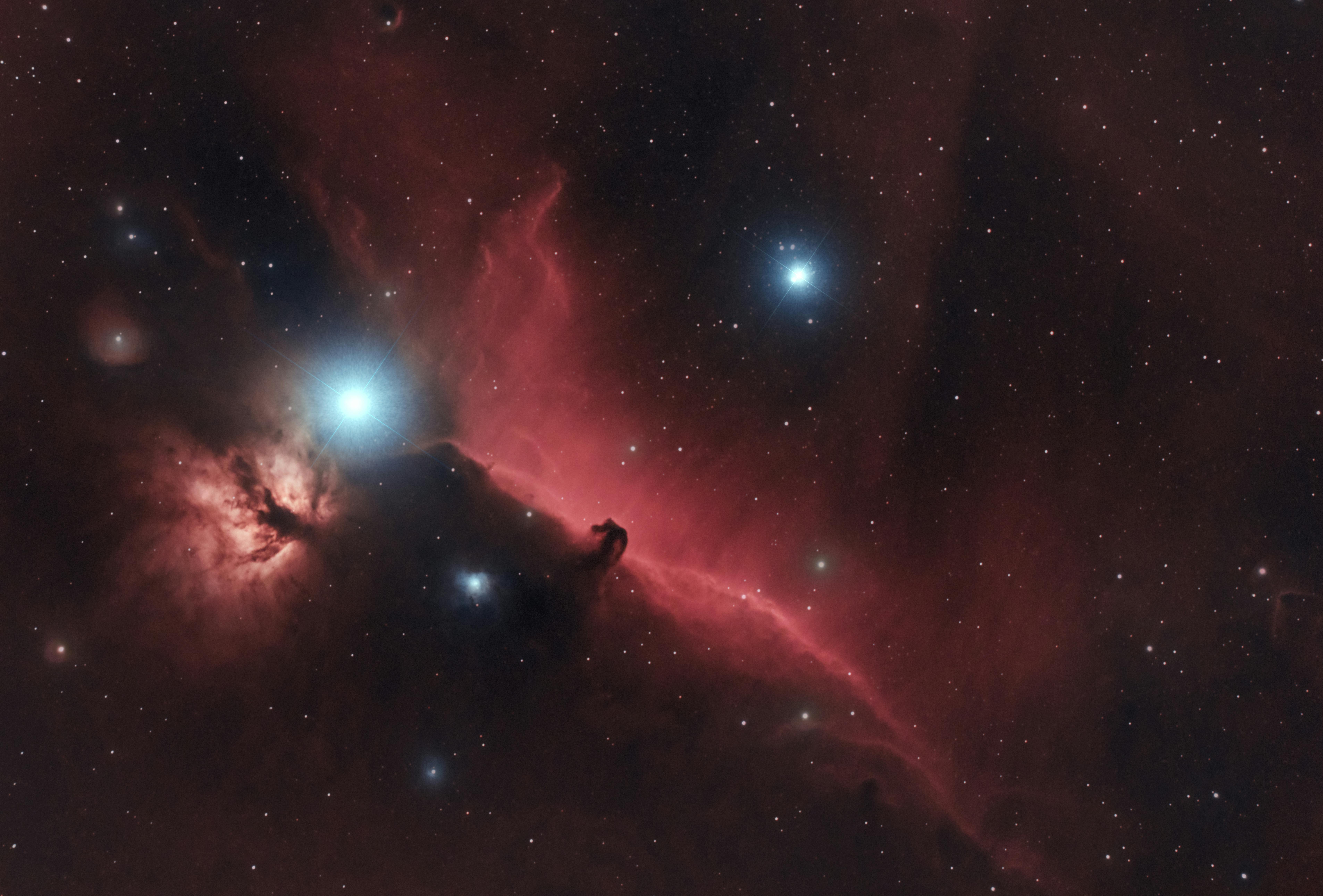

On February 23, 1987, the supernova SN1987A exploded in the Large Magellanic Cloud, visible to the naked eye from the southern hemisphere. This event marked the first supernova visible without a telescope since the invention of the telescope, providing invaluable data for astronomers.

Related Posts

AI is helping astronomers make new discoveries and learn about the universe faster than ever before
The sky is big and full of information that AI tools can help astronomers unlock. Yuga Kurita/Moment via…

A total solar eclipse presents a unique opportunity to witness a rare phenomenon — but protect your eyes
Witnessing an eclipse requires taking safety precautions. (Shutterstock) Robert Knobel, Queen’s University, Ontario A solar eclipse is a…

Why is the sky dark at night? The 200-year history of a question that transformed our understanding of the Universe
ESA/Webb, NASA & CSA, A. Martel, CC BY-SA Jonathan Biteau, Université Paris-Saclay; Alberto Domínguez, Universidad Complutense de Madrid;…

Planet cannibalism is common, says cosmic ‘twin study’
Intouchable / Openverse Yuan-Sen Ting, Australian National University and Fan Liu, Monash University How stable are planetary systems?…